

Central Adana sights include Taşköprü by the Seyhan River, Sabancı Central Mosque, Ulu Mosque and Ramazanoğlu Hall. Together, they give you a walking-focused look at the city’s riverfront and historic quarter, with visitor guidance available for Sabancı Central Mosque.
- River landmark: Taşköprü, also known as the Stone Bridge.
- Mosque locations: Sabancı Central Mosque stands on the west bank of the Seyhan River, south of Merkez Park; Ulu Mosque is part of a historic complex.
- Visiting hours: Sabancı Central Mosque’s hours are 05:00–22:00 every day.
- Access notes: Sabancı Central Mosque has accessible access and a guidance service.
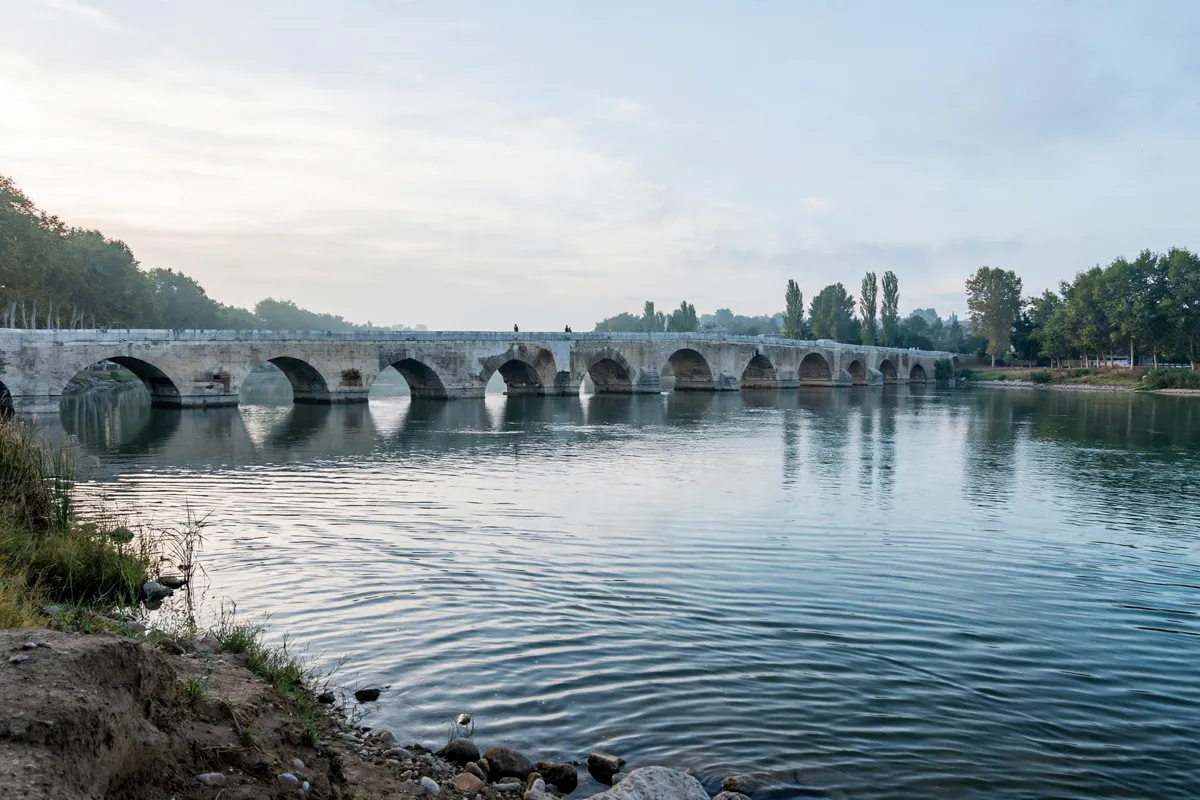
Taşköprü and the Seyhan River
Taşköprü is a central Adana landmark beside the Seyhan River. Its name is also rendered as Taş Köprü, and the Adana Provincial Directorate of Culture and Tourism includes it among the city’s places to visit.
The bridge is about 15 minutes on foot from Surmeli Adana Hotel, a five-star hotel. From here, you can continue towards the mosque landmarks and the old quarter; the river provides a clear geographic thread for the route.
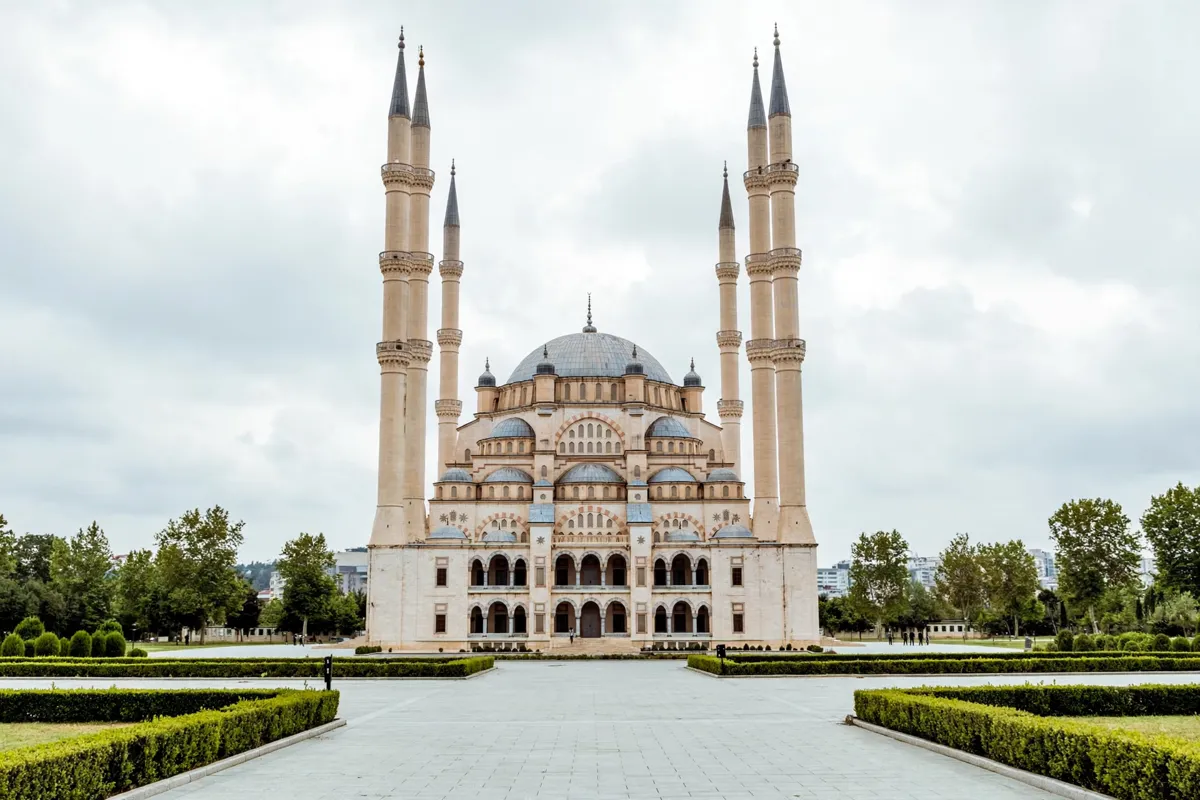
Sabancı Central Mosque
Sabancı Central Mosque stands in Adana’s Reşatbey neighborhood, south of Merkez Park on the west bank of the Seyhan River. It opened for worship in 1998.
The Adana Provincial Directorate of Culture and Tourism describes the main dome as 32 metres in diameter. The mosque has capacity for 20,000 people, rising to 28,000 when the outdoor area is included.
The Ministry of Education’s out-of-school learning listing gives visiting hours as 05:00–22:00 every day of the week. The mosque also has accessible access and a guidance service, and you can reach it by city transport.
Dress appropriately, speak quietly and avoid disrupting worship. Follow instructions from staff and security personnel. Hours and access can change, so check the Ministry of Education’s official site before you go.
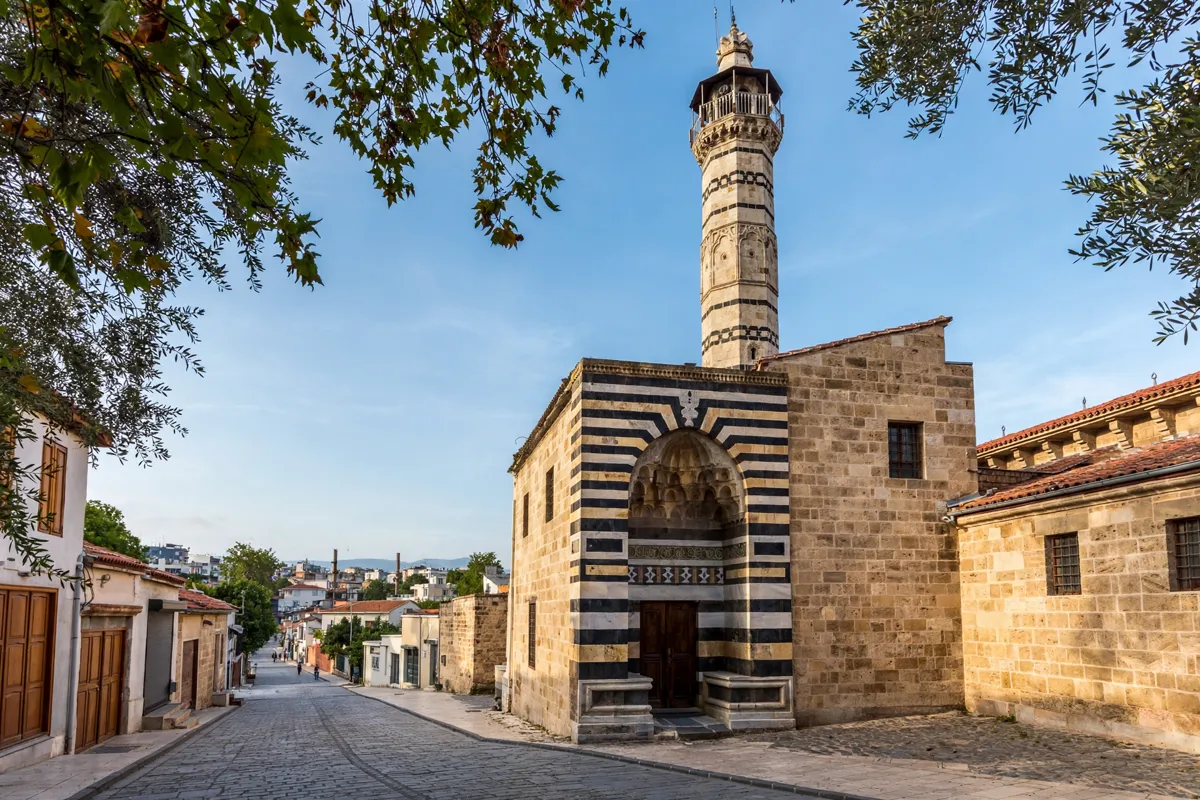
Ulu Mosque and the old quarter
Ulu Mosque is a historic complex with several connected spaces, rather than a mosque building alone. The Ministry of Culture and Tourism describes it as including a theology school, Halil Bey Mausoleum, a harem chamber and a greeting hall also called Tuz Inn.
Construction began in 1513 under Ramazanoğlu Halil Bey and was completed in 1541 by his son, Piri Mehmet Pasha. The Adana Provincial Directorate of Culture and Tourism identifies Ulu Mosque and its complex, including Ramazanoğlu Medrese, among the city’s sites associated with faith tourism.
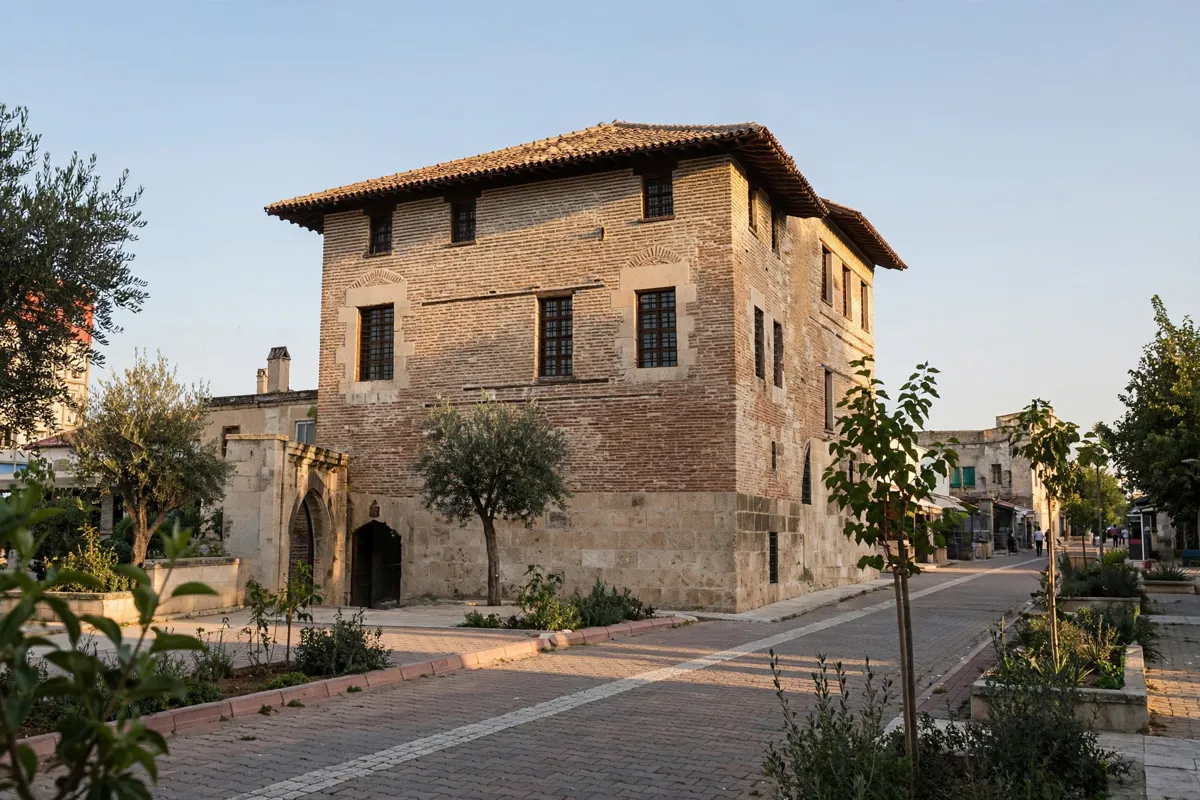
Ramazanoğlu Hall
Ramazanoğlu Hall is another historic stop in central Adana, identified by the Adana Provincial Directorate of Culture and Tourism as a place to visit. Ramazanoğlu Konağı (Medresesi) is also among the city’s historic and religious landmarks.
Before making Ramazanoğlu Hall a fixed stop, check its access arrangements with the Adana Provincial Directorate of Culture and Tourism.
Planning the walk and checking access
Plan the route around the riverfront and the historic quarter, grouping the bridge and Sabancı Central Mosque with the Ulu Mosque complex and Ramazanoğlu Hall. The Adana Provincial Directorate of Culture and Tourism includes Taşköprü, Sabancı Central Mosque, Ulu Mosque and Ramazanoğlu Konağı (Medresesi) among places to visit.
If you want a broader route through the centre, the one-day walking route through central Adana covers more of the city. Sabancı Central Mosque can be reached by city transport; you can also use map directions from Çukurova International Airport, Adana Bus Terminal or Adana Train Station.
Check access arrangements before you make Ulu Mosque or Ramazanoğlu Hall a fixed stop. At Sabancı Central Mosque, follow the visitor guidance and respect worship in progress.
FAQs
Where is Sabancı Central Mosque?
It is in Adana’s Reşatbey neighborhood, south of Merkez Park on the west bank of the Seyhan River.
What is included in the Ulu Mosque complex?
The complex includes a mosque, theology school, Halil Bey Mausoleum, a harem chamber and a greeting hall known as Tuz Inn.
When was Ulu Mosque built?
Construction began in 1513 under Ramazanoğlu Halil Bey and was completed in 1541 by his son, Piri Mehmet Pasha.
Can you add an archaeology museum visit to a day in Adana?
Yes. The Adana Archaeology Museum visit guide can help you plan that separate stop alongside the central sights.